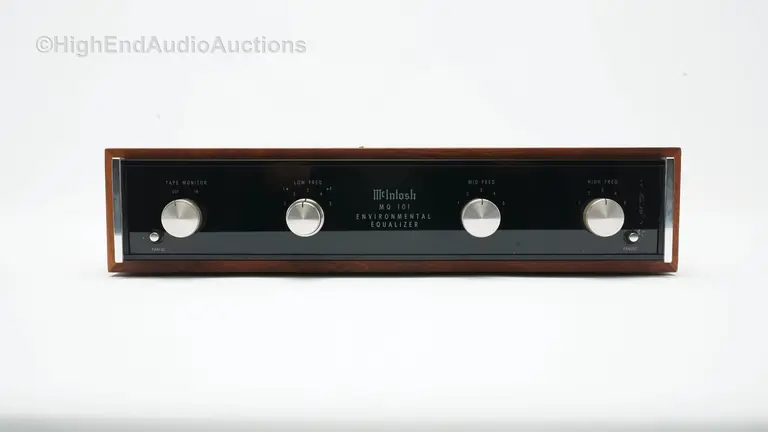
Equalizer
McIntosh is one of the most dependable brand names when it comes to high-end audio systems. For years the brand has been recognized by audiophiles throughout the world as equipment that delivers clear and consistent quality in music. McIntosh is probably best known for its amplifiers and preamps, but the company produces many other components and parts for stereo and home theatre.
Get a Free Quote- Free quote, no obligation
- We pick up in the NYC Tri-State Area, Palm Beach and Denver
- Paid on the spot
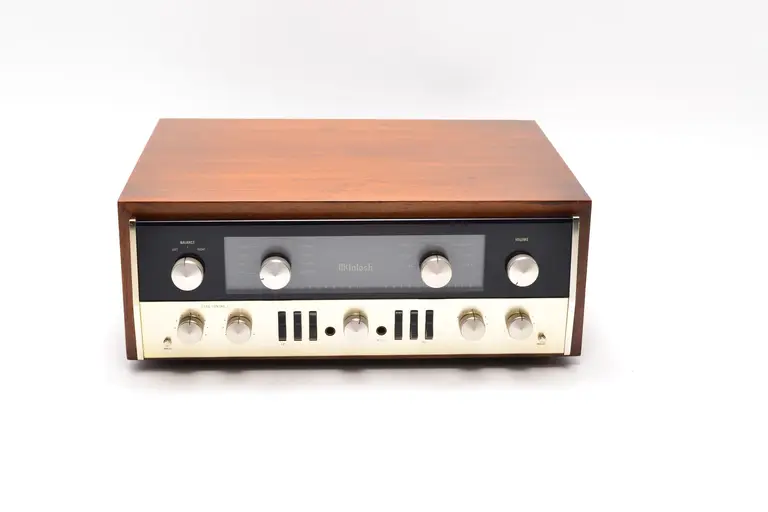
What are the specs for the McIntosh MQ 101?
- Frequency Response
- 0.5 dB from 20 Hz to 20,000 Hz
- Distortion
- 0.1% at rated output level, 20 Hz to 20,000 Hz
- Hum and Noise
- 80 dB below rated output (250 µV)
- Input Sensitivity & Impedance
- Main and tape input 2.5 volts at 60,000 ohms for rated output at 1000 Hz
- Input Attenuator
- Switched 0 dB, -6 dB, or -12 dB
- Output
- Main: 2.5 volts into 47,000 ohms or more, 20 to 20,000 Hz Tape: 2.5 volts with rated input
- Equalization
- Low frequency: 0 to +17 dB at 20 Hz in 5 steps (0, +6, +9, +13, +17dB in positions 1, 2, 3, 4, 5, respectively) Mid frequency: -5 to +5dB at 4000Hz in 5 equal steps High frequency: -4 to +4dB at 20,000Hz in 5 equal steps
- Power Requirement
- 120 volts, 50/60 Hz, 20 watts
- Size
- Front panel: 16 inches wide (40.64 cm) by 2-15/16 inches high (7.46 cm) Chassis: 15 inches wide (38.1 cm) by 13 inches deep (33.02 cm) including PANLOC shelf and back panel connectors; Knob Clearance: 1½ inches (3.81 cm) in front of mounting panel
- Weight
- 15 pounds (6.80 kg) net, 19 pounds (8.62 kg) in shipping carton
- Chassis
- Chrome & Black
- Mounting
- Mclntosh developed professional PANLOC
What else to know about the McIntosh MQ 101?
**DESIGNING FOR NATURAL BASS** Research programs have one common advantage for the alert scientist and engineer. The thousands of hours of effort, analysis, conjecture, and synthesis uncover opportunities to make meaningful contributions. Most of these opportunities are discovered just where lesser men saw only problems. One of the great opportunities that the Mclntosh acoustics research team uncovered was a design for natural sound of bass instruments. When a bass drum is struck, the motion of the diaphragm (drum head) pumps a large volume of air. The reproduction of such a sound image requires the motion of the same volume of air or, at least, a significant portion of it. Because the design objectives of low distortion and widely dispersed radiation dictate a maximum effective cone diameter of 10 inches the low frequency loudspeaker had to be designed with large excursion (back and forth movement) to achieve the air volume movement necessary. Our design objective was the development of a low frequency loudspeaker with a plus and minus one half inch cone excursion. Even with this large excursion, a straight line relationship between driving force and movement had to be maintained. To achieve this linear relationship our engineers employed a long voice coil winding, a very light edge and centering suspension and an air spring. The air spring is the natural result of mounting the speaker in a relatively small air tight extremely rigid box. When the cone moves inward, it reduces the volume of air thereby increasing its pressure. The increased air pressure returns the cone to the center of its travel when the electrical signal returns to zero value. When the cone moves outward, the volume of air increases reducing the air pressure in the box. The air pressure in the room can now restore the cone to its center position when the electrical signal again reaches zero. One of the properties of an air spring is an almost perfectly straight line relation between volume and pressure for such small changes in volume. This insures a low level of distortion at low frequencies and also a low level of intermodulation distortion. The linear air spring was combined with a stiff cone, a long voice coil winding and a very large and massive magnet structure to achieve almost perfect transient response for bass frequencies. Design engineers, in the past, have not taken advantage of this opportunity to obtain excellent transient response because of the price that must be paid. That price is a reduction in bass response. There are two ways around this problem of loss of bass. In the older technological approach to loudspeaker system design, flat frequency response was obtained by compromising the transient response using mechanical resonances in the speaker and its enclosure. This has been the traditional solution with its emphasis on cost reduction rather than reproduction accuracy. The other solution is the new approach. To restore the system to a flat frequency response while preserving nearly perfect transient response, an electrical signal is supplied having an exactly opposite curve to the curve of the reduction in bass response. Supplying this electrical signal introduces an equalizer into this system. The combination of the loudspeaker system and the equalizer produces both a flat response and an excellent transient characteristic, free of ringing, down to 20 Hz. As if this advantage were not enough, the equalizer brings about another additional improvement to the system. The position of the loudspeaker in the room can substantially alter the loudspeaker's sound balance. The equalizer can be designed to compensate for different types of rooms and for different positions of the loudspeakers in these rooms. **DESIGNING FOR DIFFERENT LISTENING ROOMS** The power out of a bass speaker at very low frequencies varies over an 8 to 1 range (9 decibels) depending on where the speaker is positioned in the room. For example if the loudspeaker enclosure is suspended in the center of a large, sound absorbing room, a 20 hertz signal will radiate equally in all directions from the loudspeaker. It will be radiating into a sphere. If the loudspeaker enclosure is then lowered to the floor in the center of the room it would be radiating into a hemisphere. The signal striking the floor would be reflected upward and the speaker power output will appear to double. If the loudspeaker is then moved along the floor to the center of the wall the power will double again. The loudspeaker is then radiating into one quarter of a sphere. Then by moving the loudspeaker into a corner of the room the radiation is concentrated into one eighth sphere with another apparent doubling in power. We have designed five curvature rates in the environmental equalizer. They provide the electrical correction necessary to make a speaker sound as it would in a corner when it's mounted on a wall or vice versa. For stereo, individual left and right controls are provided to correct for different positions of the speakers in the room. The MQ 101 in addition to the bass correction also provides correction for mid frequency and high frequency differences in rooms. Some rooms are very heavily draped and furnished. A room of this sort may need mid frequency and treble boost to make the music sound naturally alive. Other rooms are highly reflective due to using glass areas, smooth hard walls and concrete or tile floors. The opposite correction may be required to restore the music to the natural concert hall balance.More McIntosh we buy
Brief History of McIntosh
Long mapped-to Binghamton New York – the current headquarters and manufacturing center for McIntosh Labs – not many people know the brand was originally launched outside of the Nation’s Capital in Silver Spring Maryland, in 1949. In 1956, the brand built their original facility in New York, according to the official brand website.
Selling Your McIntosh to StereoBuyers
Typically, StereoBuyers purchases mostly used amplifiers, especially the vintage amps and high-end McIntosh models such as the MC202 or MC252, and the C220 preamp, for example. We have also purchased many pre-owned tuners from McIntosh over the recent years, including the MR67 and MR78 models, for example.
StereoBuyers has purchased tens of thousands worth McIntosh brand equipment since 2014, with individual buys ranging from $100 to well over $50,000. If you are moving, ready to upgrade, or have McIntosh equipment you do not or will not be using, why not contact us today to find out if it is worth good money?
If you are interested in selling your used McIntosh equipment to us in the greater NYC area or Colorado, please click here to fill out a Free Quote Form and we will get back to you. If we agree on terms, we come to meet you where you want, and pay cash.
Every McIntosh model we buy is listed below.
All McIntosh models we buy
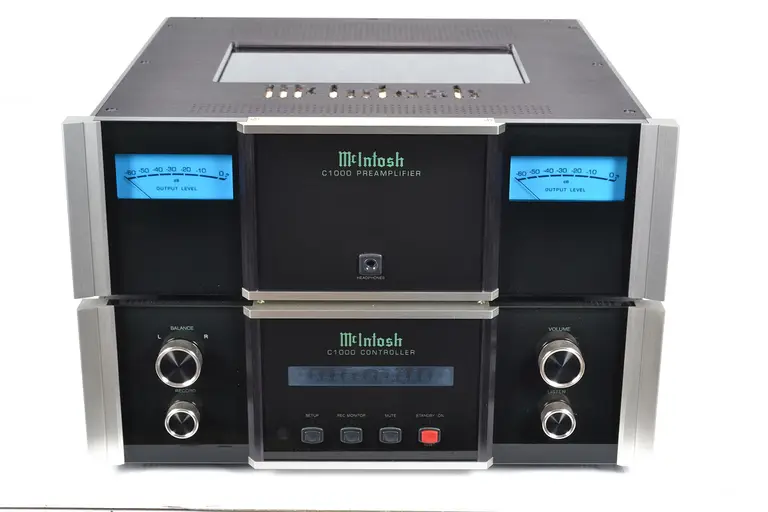
- McIntosh C 1000p/1000C · Preamplifier
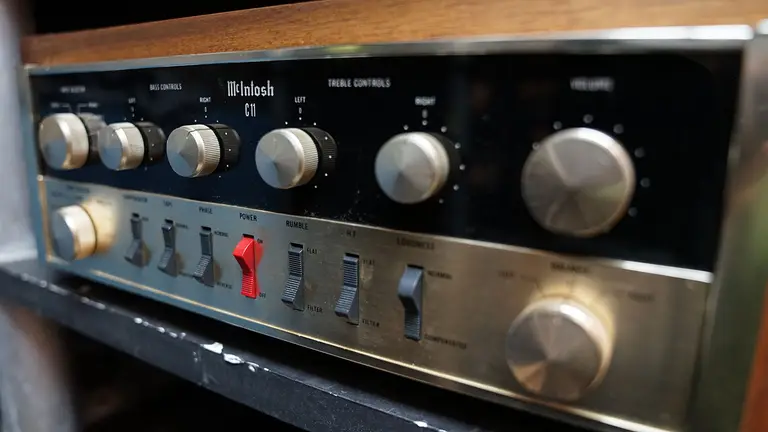
- McIntosh C 11 · Preamplifier
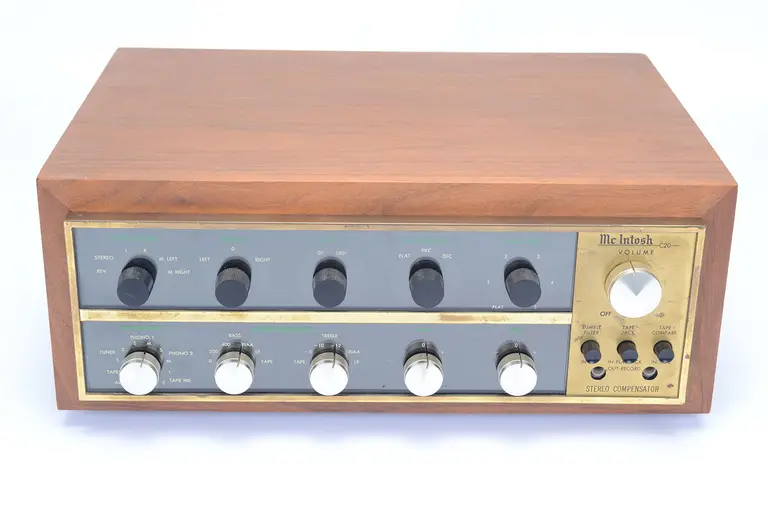
- McIntosh C 20 · Preamplifier
- McIntosh C 22 · Preamplifier
- McIntosh C 2200 · Preamplifier
- McIntosh C 2500 · Preamplifier
- McIntosh C 26 · Preamplifier
- McIntosh C 2600 · Preamplifier
- McIntosh C 28 · Preamplifier
- McIntosh C 31V · Preamplifier - AV Control Center
- McIntosh C 32 · Preamplifier
- McIntosh C 33 · Preamplifier
- McIntosh C 35 · Preamplifier
- McIntosh C 38 · Preamplifier
- McIntosh C 39 · Preamplifier
- McIntosh C 42 · Preamplifier
- McIntosh C 45 · Preamplifier
- McIntosh C 46 · Preamplifier
- McIntosh C 47 · Preamplifier
- McIntosh C 48 · Preamplifier
- McIntosh C 49 · Preamplifier
- McIntosh C 500 · Preamplifier
- McIntosh C 8 · Preamplifier
- McIntosh CR 12 · Preamplifier
- McIntosh CR 16 · Preamplifier
- McIntosh CR 7 · Remote Control System / Preamplifier
- McIntosh CR 8 · Remote Area Controller
- McIntosh D 100 · Preamplifier
- McIntosh MA 5300 · Integrated Amplifier
- McIntosh MA 6100 · Integrated Amplifier
- McIntosh MA 6400 · Integrated Amplifier
- McIntosh MA 6900 · Integrated Amplifier
- McIntosh MA 7000 · Integrated Amplifier
- McIntosh MA 2275 · Integrated Amplifier
- McIntosh MA 230 · Integrated Amplifier
- McIntosh MA 6200 · Integrated Amplifier
- McIntosh MA 6300 · Integrated Amplifier
- McIntosh MA 6500 · Integrated Amplifier
- McIntosh MA 6600 · Integrated Amplifier
- McIntosh MA 8000 · Integrated Amplifier
- McIntosh MAC 4100 · Receiver
- McIntosh MAC 4300V · Receiver
- McIntosh MAC 6700 · Receiver
- McIntosh MAC 7200 · Receiver
- McIntosh MC 162 · Power Amplifier
- McIntosh MC 205 · Power Amplifier
- McIntosh MC 206 · Power Amplifier
- McIntosh MC 2102 · Power Amplifier
- McIntosh MC 225 · Power Amplifier
- McIntosh MC 2250 · Power Amplifier
- McIntosh MC 2600 · Power Amplifier
- McIntosh MC 7150 · Power Amplifier
- McIntosh MC 75 · Amplifier
- McIntosh MC1.2KW · Power Amplifier
- McIntosh MC 1201 · Amplifier
- McIntosh MC 122 · Amplifier
- McIntosh MC 152 · Amplifier
- McIntosh MC 2000 · Amplifier
- McIntosh MC 2002 · Amplifier
- McIntosh MC 202 · Amplifier
- McIntosh MC 2100 · Amplifier
- McIntosh MC 2105 · Amplifier
- McIntosh MC 2120 · Amplifier
- McIntosh MC 2125 · Amplifier
- McIntosh MC 2200 · Amplifier
- McIntosh MC 2255 · Amplifier
- McIntosh MC 2300 · Amplifier
- McIntosh MC 2301 · Amplifier
- McIntosh MC 240 · Amplifier
- McIntosh MC 250 · Amplifier
- McIntosh MC 2500 · Amplifier
- McIntosh MC 2505 · Amplifier
- McIntosh MC 252 · Amplifier
- McIntosh MC 275 · Amplifier
- McIntosh MC 302 · Amplifier
- McIntosh MC 352 · Amplifier
- McIntosh MC 402 · Amplifier
- McIntosh MC 452 · Amplifier
- McIntosh MC 50 · Amplifier
- McIntosh MC 501 · Amplifier
- McIntosh MC 502 · Amplifier
- McIntosh MC 60 · Amplifier
- McIntosh MC 7106 · Amplifier
- McIntosh MC 7108 · Amplifier
- McIntosh MC 7200 · Amplifier
- McIntosh MC 7270 · Amplifier
- McIntosh MC 7300 · Amplifier
- McIntosh MC 754 · Amplifier
- McIntosh MC 8207 · Amplifier
- McIntosh MCD 205 · CD Player
- McIntosh MCD 301 · SACD / CD Player
- McIntosh MD 1100 · CD Player
- McIntosh MD 7005 · CD Player
- McIntosh MCD 7007 · CD Player
- McIntosh C34V · Audio / Video Control Center
- McIntosh C712 · System Control Center Preamplifier
- McIntosh MA 5100 · Integrated Amplifier
- McIntosh MA 7900 · Integrated Amplifier
- McIntosh MAC 1700 · Stereo Receiver
- McIntosh MC 2205 · Power Amplifier
- McIntosh MCC406M · Car Audio
- McIntosh MCD 7009 · CD Player
- McIntosh MHT 100 · A/v System Controller
- McIntosh ML 10C · Speakers
- McIntosh MPI-4 · Maximum Performance Indicator
- McIntosh MX 121 · A/v Control Center
- McIntosh MCT 500 · CD Transport
- McIntosh MCT 450 · CD Player
- McIntosh MEN 220 · Room Collection
- McIntosh MHA 100 · Headphone Amplifier
- McIntosh MHA 150 · Headphone Amplifier
- McIntosh MHP 1000 · Headphones
- McIntosh MHT 200 · Surround Sound Processor
- McIntosh MI 3 · Performance Scope
- McIntosh ML 1C · Speakers
- McIntosh MLD 7020 · Laser Disc Player
- McIntosh MPC 500 · Power Controller
- McIntosh MR 500 · Tuner
- McIntosh MR 65a · Tuner
- McIntosh MR 65b · Tuner
- McIntosh MR 67 · Tuner
- McIntosh MR 7082 · Tuner
- McIntosh MR 7083 · Tuner
- McIntosh MR 71 · Tuner
- McIntosh MR 73 · Tuner
- McIntosh MR 74 · Tuner
- McIntosh MR 77 · Tuner
- McIntosh MR 78 · Tuner
- McIntosh MR 80 · Tuner
- McIntosh MR 85 · Tuner
- McIntosh MR 88 · Tuner
- McIntosh MT5 · Turntable
- McIntosh MVP 861 · Universal Disc Player
- McIntosh MVP 851 · Amplifier
- McIntosh MX 110 · Tuner Preamplifier
- McIntosh MX 112 · Tuner Preamplifier
- McIntosh MX 120 · Preamplifier
- McIntosh MX 122 · Preamplifier
- McIntosh MX 130 · Tuner Preamplifier
- McIntosh MX 135 · Preamplifier
- McIntosh MX 136 · Audio / Video Preamplifier
- McIntosh MX 110Z · Tuner Preamplifier
- McIntosh MX 113 · Tuner Preamplifier
- McIntosh MX 132 · AV Control Center
- McIntosh RS 200 · Wireless Speaker
- McIntosh XLS 360 · Speakers